
Bournemouth and Leeds United recently met at the Vitality Stadium for a dramatic Premier League fixture that left visiting supporters feeling frustrated. The key talking point from the match centered on a disallowed goal for Leeds striker Dominic Calvert-Lewin. Under manager Daniel Farke, Leeds thought they had broken the deadlock early in the match, only for the video assistant referee to intervene and spark a heated debate.
The incident occurred during the nineteenth minute of the first half. Calvert-Lewin managed to find the back of the net after a promising attacking sequence, leading to celebrations among the travelling team and staff. However, the joy proved short-lived. The match officials paused the game while the VAR team reviewed the build-up to check for any potential infractions. Following a thorough examination, the review team recommended that the referee disallow the goal due to an accidental handball by the Leeds forward just moments before he scored.
Shortly after the incident, the Premier League published an official statement via social media to clarify the reasoning behind the controversial ruling. The statement explained that the VAR team reviewed the original goal award and determined that Calvert-Lewin handled the ball immediately prior to the finish. Consequently, the referee was advised to overturn the original decision and rule out the effort.
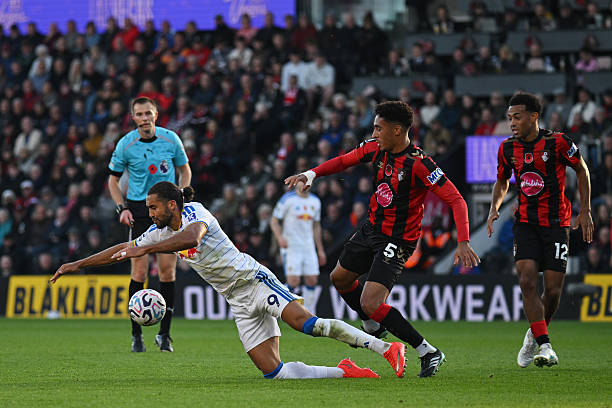
To provide further transparency, the Premier League Match Centre shared the exact rationale behind the final verdict. The official explanation noted that the ball accidentally brushed against Calvert-Lewin’s left arm before traveling directly into the goal. The referee then communicated this finding to the stadium, confirming that the contact with the arm of the Leeds number nine meant the goal could not stand and that the match would restart with a free-kick to Bournemouth.
Although the league acknowledged that the contact was completely unintentional, current football regulations strictly dictate that any accidental handling by the goalscorer immediately before the ball enters the net must result in the goal being chalked off. This rule applies regardless of whether the player meant to use their arm.
The disallowed goal proved to be a major turning point in the contest. Instead of taking a crucial lead away from home, Leeds found themselves deflated by the decision. Bournemouth capitalized on the momentum shift shortly afterward, managing to break the deadlock and secure a 1-0 lead heading into the half-time interval.
For Calvert-Lewin and his teammates, the setback was particularly difficult to swallow. The striker had done everything right to position himself for the finish, only to be denied by a technical rule regarding accidental contact. Farke and his coaching staff will undoubtedly feel that luck was not on their side during the crucial phase of the game, especially against a Bournemouth squad that has been in impressive form recently.
While the Premier League’s explanation successfully clarified the letter of the law regarding the incident, it did little to ease the frustration of the Leeds supporters and players. As the team regrouped for the second half, they faced an uphill battle to turn the scoreline around after having an early advantage slip through their fingers. The controversial moment serves as yet another reminder of how technology continues to shape the outcomes of Premier League matches, leaving teams to deal with the fine margins of the game.