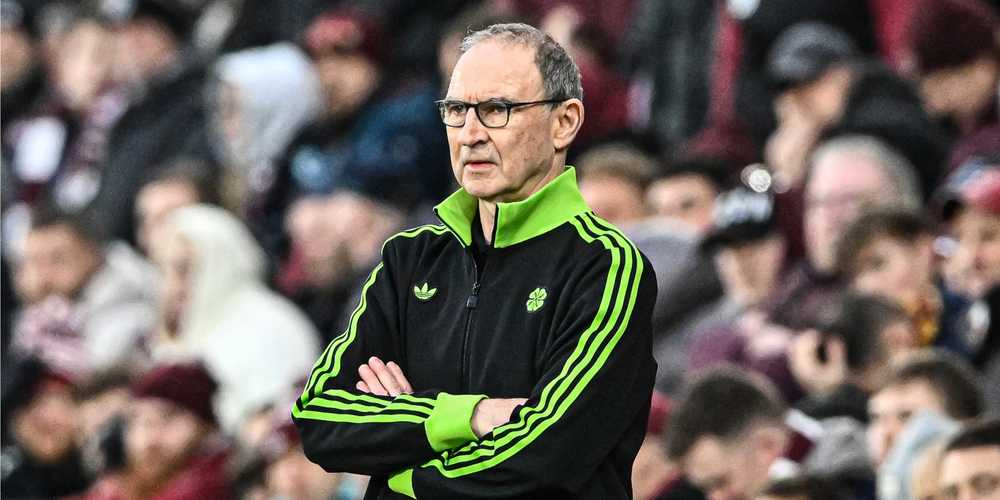
Martin O’Neill needs to change what Celtic are doing, because what is happening right now is not working and showing no signs of fixing itself.
After the defeat to Dundee United, O’Neill spoke about Celtic being camped around their opponents’ penalty area as though that was something to take encouragement from. It is not. Being in and around the box without creating anything meaningful is not a positive sign. It is the clearest indication that the system is broken.
Celtic are keeping the ball. They are moving it around neatly and maintaining possession comfortably. But possession is not the same as threat, and Celtic are producing plenty of the former while generating almost none of the latter. Controlling the ball and controlling a game are two entirely different things, and right now Celtic are doing one while mistaking it for the other.
At some point the manager has to look at this honestly. When a tactical approach consistently fails to produce the required output, the responsibility of the coaching staff is to recognise that and change it. What Celtic are persisting with is a system that has gone completely stale, yet the same patterns are being repeated as though they will eventually yield a different result.
This is not a personnel problem. Celtic have rotated throughout the season and the same issues keep appearing regardless of who is playing. When that happens repeatedly, the question has to shift from what is wrong with the players to what is wrong with the structure they are being asked to operate within.
It is worth acknowledging, even if reluctantly, what Wilfried Nancy’s approach did well. His football moved forward with pace and purpose, it stretched defences, it created chances. The finishing was not always there to take advantage of them, but the chances existed. The system asked questions of opponents that they found difficult to answer.
What Celtic are doing now asks nothing of the opposition. Teams sit in shape, stay compact, and watch Celtic pass the ball sideways and backwards without ever feeling genuinely threatened. The ball moves, but defenders never do. Players like Liam Scales receive possession, look up, see a wall of organised opponents, and play the safe pass because there is nothing else available. Tempo drops, the opposition resets, and the cycle begins again.
The midfield is frequently too advanced, leaving gaps that require awkward passes into space that opponents can read and close down easily. The connection between the defensive and attacking lines is severed, and the ball drifts into areas where it can be taken away without much effort. The patterns are predictable, the movement is minimal, and every opposing team in the Premiership knows exactly what is coming.
O’Neill has been in football long enough to understand all of this. The question is whether he sees it and is choosing not to act on it, or whether he genuinely believes the current approach is working and the results will eventually come. Either possibility is concerning, because neither leads to the conclusion that things will change on their own.
The system needs to change. It needs to change now. Celtic are not just failing to win games with this approach. They are being pulled further away from the kind of football that might.